
Visualization Meditation: Using the Mind to Support Well-Being
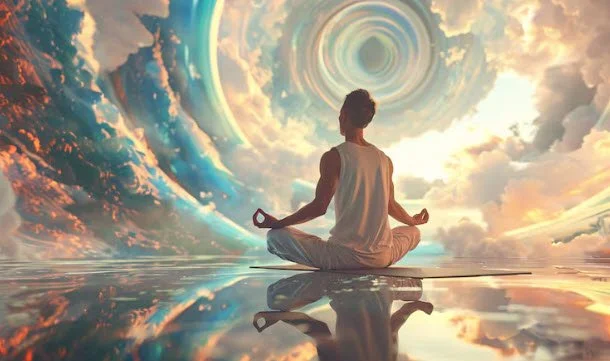
🌿 What Is Visualization Meditation?
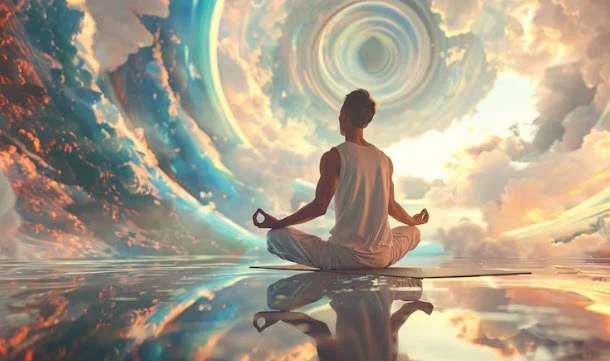
Visualization meditation is a practice that uses the imagination to create a detailed mental picture, feeling, or experience.
Instead of simply sitting quietly and focusing on the breath, visualization gives the mind something specific to imagine. You might picture yourself walking through a peaceful natural setting, imagine your body becoming relaxed, or mentally rehearse an activity you want to perform with confidence.
Visualization is also commonly referred to as guided imagery or mental imagery in scientific and clinical settings. Researchers have studied it in areas ranging from psychology and rehabilitation to medicine and sports science.
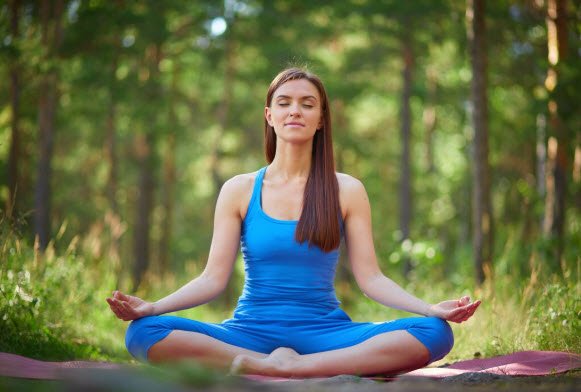
The practice can be very simple. You close your eyes, slow your breathing, and create a mental picture using as many senses as you can. You might imagine what you would see, hear, feel, or even smell.
The goal is not to create a perfect picture in your mind. It is simply to give your attention a positive and purposeful direction.
✨ How Does Visualization Meditation Work?
Our minds can respond strongly to things we imagine. When you visualize an experience, you are using many of the same mental processes involved in thinking about or remembering an experience. This is one reason visualization has become useful in areas such as mental training, rehabilitation, and sports performance.
For example, someone preparing for a presentation might imagine standing confidently in front of an audience, speaking clearly, and remaining calm. An athlete might mentally rehearse a movement before performing it.
Visualization can also be combined with breathing and relaxation. A person might slowly breathe while imagining tension leaving the body or picturing a calm and comfortable environment.
This combination gives the mind a specific focus while encouraging the body to settle into a more relaxed state.
🧠 Visualization Meditation and Mental Well-Being
Visualization can be a useful way to give the mind a break from constant thoughts and everyday distractions.
A peaceful mental image can encourage feelings of calm and provide something constructive to focus on. Guided imagery research has examined outcomes including anxiety, stress, coping, well-being, sleep, and self-perception.
Visualization is also used as a form of mental rehearsal. Instead of simply hoping that something will go well, a person can mentally practice how they would like to approach it.
This can be particularly useful for situations that require concentration, confidence, preparation, or emotional control.
💚 Visualization Meditation and the Physical Body
Although visualization takes place in the mind, the practice can also be connected with physical experiences.
Guided imagery has been studied in relation to pain management, physical rehabilitation, mobility, and other health outcomes. Research has also explored its use alongside relaxation techniques.
For example, a person experiencing physical discomfort might use guided imagery to imagine a comfortable environment while practicing slow breathing and relaxation.
It is important to understand that visualization is not a replacement for medical treatment. Rather, research has explored it as a complementary practice that may help people cope with certain physical and emotional experiences.
🌸 Visualization and the Mind-Body Connection
One of the most interesting parts of visualization meditation is the connection between mental experiences and physical responses.
When someone becomes worried, excited, or relaxed, the body can respond as well. Breathing, muscle tension, attention, and other physical sensations can change along with emotional states.
Visualization works within this mind-body relationship by deliberately directing attention toward a chosen mental experience.
For some people, imagining a peaceful place while breathing slowly may make it easier to relax. For others, imagining successful movement or completing a task may help them prepare mentally before doing it.
This is one reason visualization appears in both wellness practices and more specialized areas of training and rehabilitation.
🏃 Where Is Visualization Used?
Visualization isn't limited to meditation. Researchers and professionals have studied imagery across several different fields.
🏅 Sports and Athletic Training
Athletes commonly use mental imagery to rehearse movements, techniques, and competitive situations.
A recent systematic review and meta-analysis examined 86 studies involving 3,593 athletes and found evidence of benefits from imagery practice across several areas of athletic performance, although the researchers also noted differences between studies and that imagery may work particularly well when combined with other psychological skills training.
An athlete might mentally rehearse a golf swing, tennis serve, gymnastics routine, or running strategy before performing it physically.
🧠 Psychology
Psychology has used imagery techniques to explore areas such as anxiety, stress, coping, self-confidence, and emotional well-being.
Visualization can give people a structured way to focus their thoughts rather than allowing their attention to move continuously from one worry to another.
🏥 Medicine and Health Care
Guided imagery has been studied in a variety of medical settings, including pain management, cancer care, surgery, arthritis, anxiety, and other health conditions. A large review of the research identified studies across medicine, nursing, psychology, rehabilitation, and other disciplines.
🦵 Rehabilitation
Visualization can also be incorporated into rehabilitation. Research has examined imagery in areas such as stroke recovery, mobility, balance, gait, and physical rehabilitation.
The idea is particularly interesting because mental rehearsal can allow someone to practice an action mentally, sometimes alongside physical rehabilitation.
🌱 A Simple Visualization Meditation
Visualization doesn't have to be complicated.
Find a comfortable place where you can sit or lie down without being disturbed.
Take a few slow breaths and allow your attention to settle.
Then choose something peaceful or positive to visualize. It could be:
🌳 Walking through a quiet forest
🌊 Sitting beside the ocean
🌸 Relaxing in a beautiful garden
☀️ Feeling warm sunlight on your skin
🏅 Successfully completing an activity
💚 Feeling calm and comfortable
Try to involve more than just your sense of sight. Imagine the sounds around you, the temperature, the movement of your body, and how you would feel in that moment.
You don't need to force the image to be perfectly clear. Simply allow the idea to develop naturally while continuing to breathe slowly.
Even a few quiet minutes can give your mind an opportunity to pause and focus.
🌟 Final Thoughts
Visualization meditation brings together imagination, attention, breathing, and the mind-body connection.
What makes it interesting is how widely the practice has been explored. From sports training and psychology to rehabilitation and health care, researchers have investigated different forms of imagery for a variety of physical and mental outcomes.
For everyday life, visualization can be something very simple: taking a few quiet minutes to imagine a peaceful place, mentally prepare for something important, or give your attention to a positive experience.
It doesn't require special equipment or a complicated routine. It begins with something we all have—the ability to imagine.
🌿 Care Product Reminder
The information on this page is intended for educational purposes and should not replace professional medical advice. Every person is unique, so consider your individual needs and consult a qualified healthcare professional if you have specific concerns about your skin, hair, scalp, or overall health.