
✨ What Is Biotin?
Biotin, also known as vitamin B7, is an essential water-soluble B vitamin that helps your body carry out several important everyday functions. Although the body needs only small amounts, Biotin plays a valuable role in turning the food you eat into energy and supporting the processes that keep your body functioning properly.
Because Biotin is often mentioned in conversations about hair, skin, and nails, many people associate it mainly with beauty. However, its role goes beyond appearance. Biotin is involved in the metabolism of carbohydrates, fats, and proteins, helping your body use these nutrients to support its daily needs.
Understanding Biotin and its benefits can help you make informed choices about nutrition, supplements, and overall well-being.
🌱 What Does Biotin Do in the Body?
Biotin helps several enzymes perform essential chemical reactions in the body. These reactions are important for metabolism, which is the process through which your body uses nutrients from food.
Some of Biotin's key functions include:
Supporting energy metabolism: Biotin helps the body process carbohydrates, fats, and proteins so their nutrients can be used for energy.
Helping the body use nutrients: It supports metabolic processes that allow your body to make use of the food you eat.
Supporting normal cellular functions: Biotin participates in processes involved in cell activity and the regulation of certain genes.
Contributing to normal growth and development: Like other essential B vitamins, Biotin helps support the biological processes needed for the body to function and develop.
These functions make Biotin an important part of a balanced approach to nutrition and everyday health.
💚 Biotin and Overall Well-Being
A healthy body depends on a variety of nutrients working together. Biotin is one of these nutrients, contributing to the metabolic processes that help your body function as it should.
Getting enough Biotin is particularly important for maintaining normal bodily functions. When the body does not receive enough, a deficiency can affect several areas of health, including the skin, hair, and nervous system.
Biotin deficiency is uncommon among people who eat a varied diet. For most people, a balanced eating pattern provides the Biotin their bodies need.
🥑 Natural Food Sources of Biotin
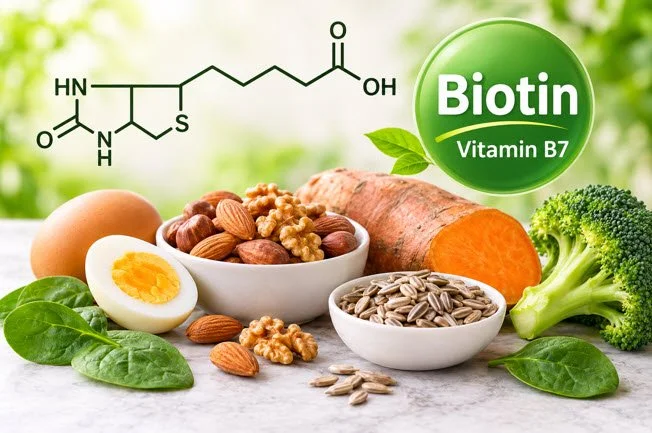
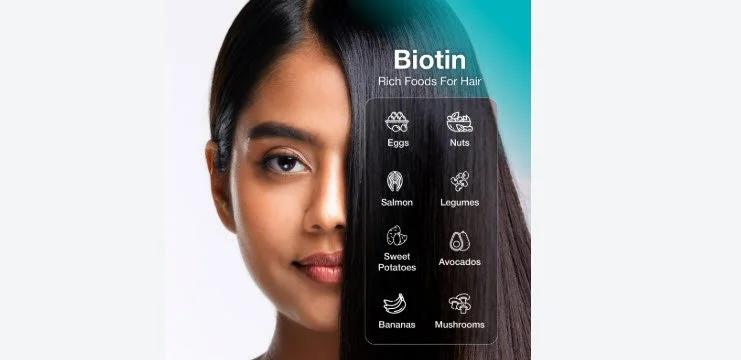
One of the simplest ways to get Biotin is through a varied diet. Many everyday foods contain this vitamin, making it possible to obtain it from different sources.
Foods that provide Biotin include:
Eggs: Cooked eggs are a source of Biotin.
Fish and meat: Certain fish and meats provide this vitamin.
Organ meats: Foods such as cooked liver can contain relatively high amounts of Biotin.
Nuts and seeds: These provide Biotin along with other valuable nutrients.
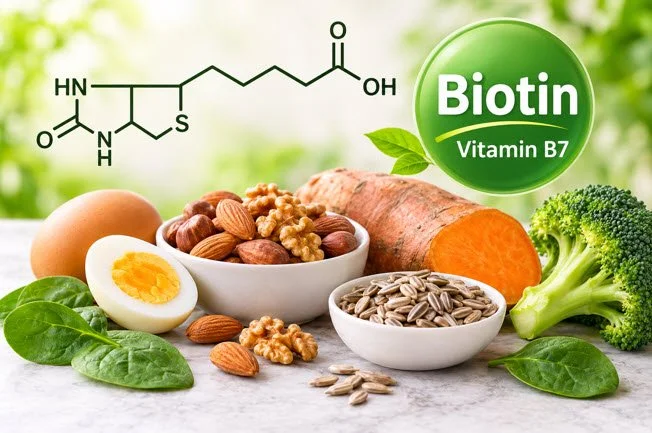
Vegetables: Some vegetables, including sweet potatoes, spinach, and broccoli, contain Biotin.
The amount of Biotin varies depending on the food and serving size. Including a variety of foods in your eating pattern can help you obtain Biotin alongside other essential vitamins and minerals.
🌸 How Much Biotin Does the Body Need?
The amount of Biotin needed each day depends on age and life stage.
According to the U.S. National Institutes of Health, the adequate intake for adults aged 19 and older is 30 micrograms (mcg) per day. The adequate intake is a recommended level used when scientific evidence is insufficient to establish a formal recommended dietary allowance.
Pregnant adults also have an adequate intake of 30 mcg per day, while breastfeeding adults have an adequate intake of 35 mcg per day.
These amounts refer to total daily intake from food and supplements combined. Most people can obtain enough Biotin through their usual diet without needing a separate supplement.
💊 Biotin Supplements: What Should You Know?
Biotin is available in several types of dietary supplements, including multivitamins, B-complex vitamins, and products containing Biotin alone.
Supplements may be useful for people who have a confirmed deficiency or particular nutritional needs. However, taking extra Biotin is not automatically beneficial for everyone, and high-dose products are not necessary for most people who already get enough.
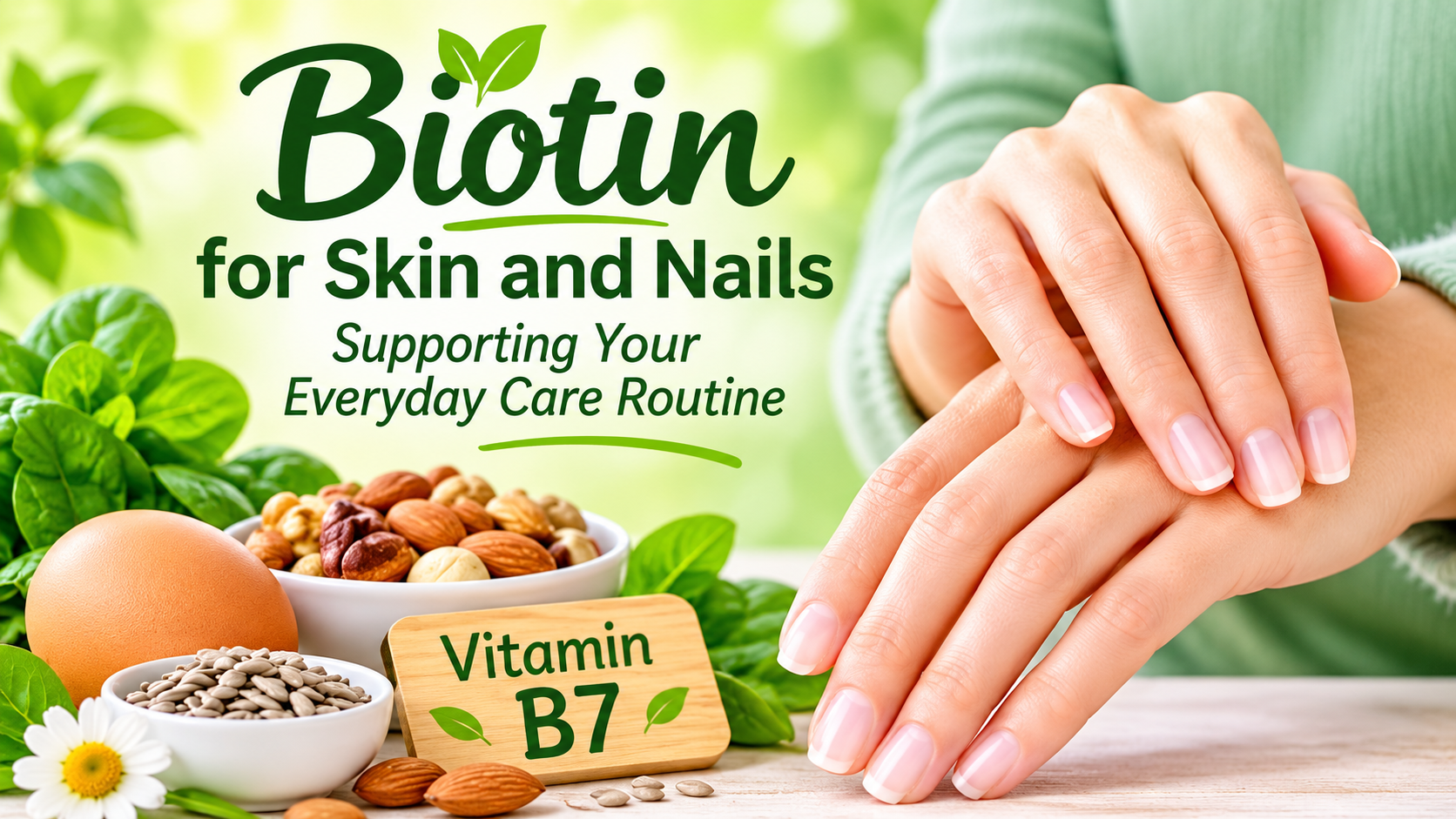
Biotin supplements are frequently promoted for hair, skin, and nail health. Although Biotin is essential for normal bodily functions, scientific evidence supporting extra Biotin for these beauty-related benefits in people without a deficiency remains limited.
Before starting a supplement, consider your individual needs and discuss the appropriate amount with a qualified healthcare professional.
An important reminder: High-dose Biotin supplements can interfere with certain laboratory tests, including some tests used to measure thyroid hormones and other substances in the blood. If you take Biotin, tell your healthcare professional before having blood tests so they can advise you appropriately.
🌿 What Happens When the Body Does Not Get Enough Biotin?
Biotin deficiency is rare, but it can occur in certain circumstances, including some inherited conditions and situations that affect nutrient absorption or availability.
Possible signs of deficiency include thinning hair, skin rashes, brittle nails, and neurological symptoms. These signs can also have other causes, so they should not be used on their own to determine whether someone needs more Biotin.
If you have concerns about your nutrition or experience persistent changes in your hair, skin, nails, or general health, a qualified healthcare professional can help identify the cause and determine whether further evaluation is needed.
✨ Final Thoughts
Biotin is a small but important part of the body's nutritional needs. By helping the body use carbohydrates, fats, and proteins, this essential vitamin supports the metabolic processes that keep us functioning every day.
A varied diet that includes foods containing Biotin is a practical way to support your nutritional needs. Learning about essential nutrients also helps you understand the difference between what your body needs and what is often promoted in supplements.
🌿 Care Product Reminder
The information on this page is intended for educational purposes and should not replace professional medical advice. Every person is unique, so consider your individual needs and consult a qualified healthcare professional if you have specific concerns about your skin, hair, scalp, or overall health.